

5 common misconceptions about vanilla that are costing your kitchen dearly
Vanilla is one of the most widely used spices in pastry, gourmet cuisine, and laboratories. Yet, it is still surrounded by many misconceptions that directly influence your purchasing choices—and therefore your margins. At Or Noir Vanilla, we source our Grand Cru vanilla directly from the Sambava region of Madagascar. As a result, we know this product inside out, and we want to help you get the most out of it. Here are 5 myths to debunk once and for all.
1. "Liquid vanilla is more economical" — False
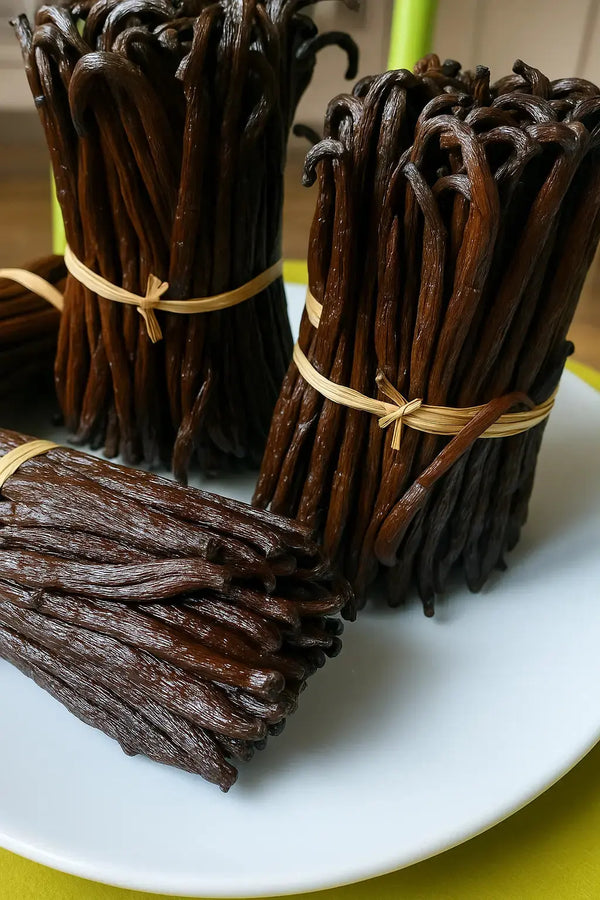
This is the most widespread misconception, and yet the least well-founded. A well-utilized vanilla pod can be used for several successive purposes:
- The beans to flavor your preparation directly
- The pod infused in a cream, milk, or rum
- The rest to prepare homemade vanilla sugar
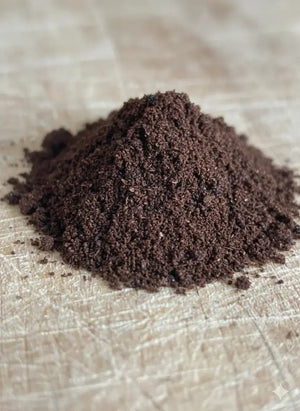
- The dried pod ground into powder
The real cost of a pod depends on its full utilization, not its format. Industrial liquid vanilla, often diluted, does not offer you this versatility. Account for all uses, and the pod proves to be much more cost-effective.
2. "A split pod is more aromatic" — False
We often hear it: a pod that is already split is a good sign. In reality, it is the opposite. The pod protects the aromas naturally. An intact pod retains its aromatic richness better than a pod that has been cut open and exposed to the air.
It is no coincidence that the best vanillas are packaged under vacuum, away from air and light: this is precisely to preserve the integrity of the pod and its volatile compounds.
3. "The larger the size, the better the quality" — False
Many professionals associate length with quality. However, the aromatic quality of a vanilla does not depend on its size. Whether it is 18–21 cm or 14–18 cm, the vanillin concentration and aromatic profile remain identical.
The real difference between sizes? The number of pods per kilo. A shorter size simply gives you more pods for the same weight—which can even be an advantage in terms of practicality and dosing.
4. "A good vanilla smells of anise, red fruits, or the forest floor" — False
Marketing around vanilla has multiplied complex aromatic descriptors. But the chemical reality is simpler: the dominant signature of vanilla is natural vanillin. It is what defines the quality and authenticity of the product.
The notes of anise, red fruits, or the forest floor are more a matter of marketing than rigorous analysis. Our Grand Cru vanilla from Sambava, with a vanillin content higher than 2.5%, speaks for itself—without detour.
5. "A frosted vanilla has been frozen" — False
The white frost visible on some pods sometimes causes concern. Yet, there is nothing to worry about—quite the opposite. This natural phenomenon is a crystallization of vanillin on the surface of the pod, a sign of exceptional aromatic concentration.
It is rare (less than 1% of harvests), cannot be artificially reproduced, and is completely natural. A frosted pod is actually an excellent pod. If you find one, you are lucky.
Conclusion: vanilla deserves better than shortcuts
Vanilla is a living, complex product, born from artisanal know-how. Understanding it means buying it better, using it better, and getting the most out of it—for your kitchen as well as your profitability.
At Or Noir Vanilla, we work directly with producers in the Sambava region to offer you traceable, authentic Grand Cru vanilla, with a guaranteed vanillin content of ≥ 2.5%. Each pod tells a story—and every purchase directly supports Malagasy artisans.
👉 Discover our selection of Grand Cru vanilla from Madagascar and order directly on ornoirvanilla.fr
Are you a professional (pastry chef, chef, laboratory)? Contact us for our B2B offer—tiered pricing, suitable packaging, express delivery.